
Arrest Warrants in Albemarle County
Under Virginia Code section 19.2-72, a magistrate cannot issue an arrest warrant without a sworn examination and probable cause. The magistrate weighs the facts and the law, and may pick a summons over a warrant. A felony demands a written complaint. If the complainant is not law enforcement, the Commonwealth's Attorney, or an agency with jurisdiction, must authorize the complaint first. In Albemarle County, ACPD's FAQ sends anyone seeking a criminal warrant straight to the magistrate. Reviewing that complaint is the magistrate's job; deputies serve court process, so the Sheriff is not the probable-cause decision maker here.
- Bring the complaint information to the District 16 Magistrate for review.
- For a felony, prepare the required written complaint.
- A non-law-enforcement felony complaint needs prior authorization from an office with jurisdiction.
- The magistrate decides whether the facts support a warrant or summons.
Albemarle Magistrate Review Comes Before Service
The District 16 Magistrate's Office sits at 1610 Avon Street Extended, beside the regional jail. Magistrates are on duty around the clock statewide. Confirm local public-entry details before you travel. No Albemarle County warrant issues until the sworn complaint clears the state standard. The county's ACPD FAQ points anyone making a criminal complaint to the magistrate in person, and the official Magistrate Services page lays out warrant review and initial bail duties.
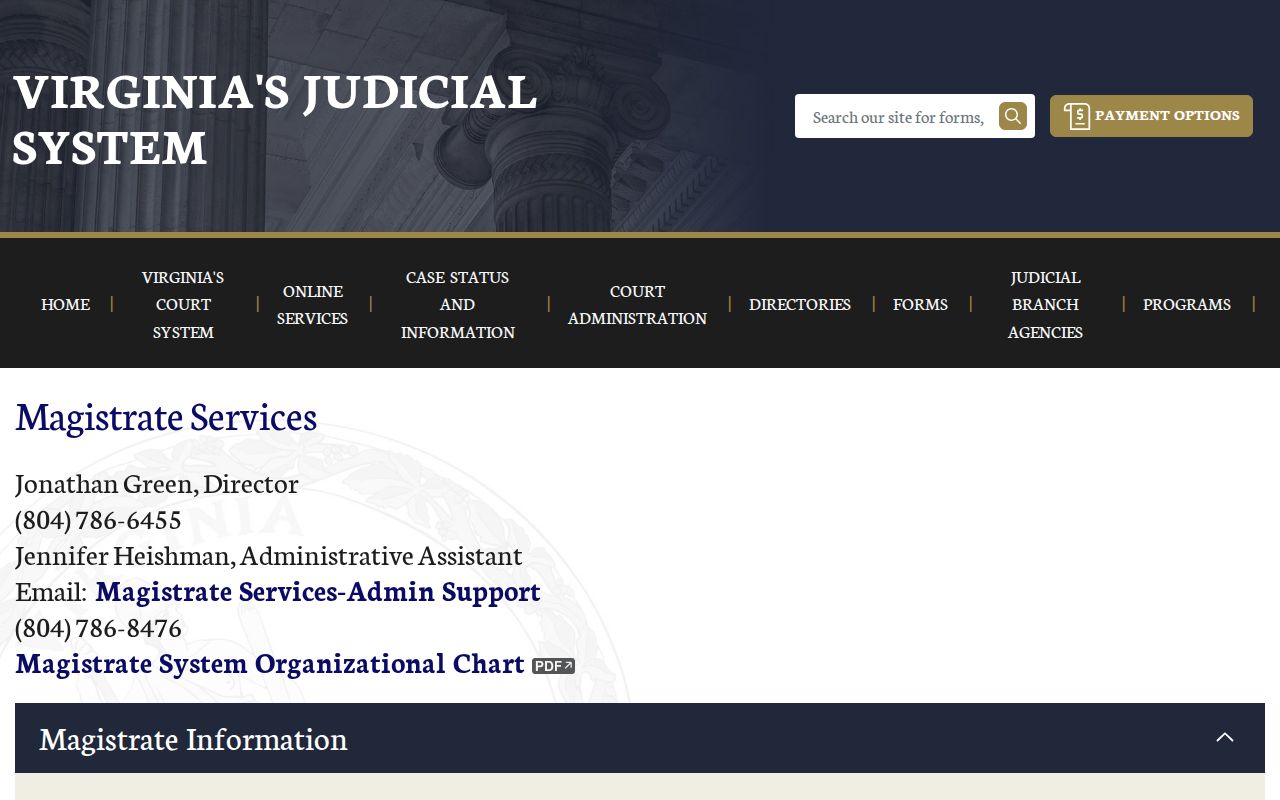
The magistrate issues the initial papers, and the Albemarle County court clerk keeps the case file and confirms its docket history.
What an Albemarle County Arrest Warrant Contains
Virginia's forms give a warrant its shape. The DC-312 felony form and the DC-314/315 misdemeanor forms name the charge, court, accused, and process. A DC-330 recognizance may carry release conditions. The public OCIS display in Albemarle County may not show every field on the signed document.
| Identifier | Case number and offense tracking number; no local format key was found. |
|---|---|
| Charge | One charge per felony warrant, with a Virginia Code citation. |
| Issuer | Magistrate, judge, or clerk as authorized for the process. |
| Service | Officer, agency, execution date, and return may be recorded. |
| Bond | Conditions may be attached on a recognizance or release order. |
| Protected details | Juvenile, sealed, or investigative data may be withheld. |
Albemarle Arrest Forms Separate Charge and Bail
Felony arrests in Albemarle County run on the DC-312 form. It captures the charge and Code citation, case and offense numbers, hearing block, issuing authority, and return details. Release terms, if any, go on a separate recognizance form. A form schema only explains the fields. It is not a copy of any person's warrant. When you ask an Albemarle County clerk which document controls, bring the notice or case number, and never treat a sample number as a local warrant number.
How Arrest Warrants Are Served
The Albemarle County Sheriff's Office serves warrants and other court-authorized documents. ACPD and Scottsville Police can also execute process within their authority. Under Virginia Code section 19.2-76, an officer may execute a warrant or capias issued anywhere in Virginia while acting within the officer's own jurisdiction. After an arrest, section 19.2-80 requires prompt appearance before a judicial officer for bail unless summons process applies. Release on terms does not end the underlying Albemarle County case.
Albemarle Service Counts Describe Agency Work
Albemarle County agencies count their own work. ACPD reported its Police Services Unit processed 2,059 warrants in 2024. The Sheriff's 2025 report counted 48 warrants served. Different years, different measures, and neither figure says how many Albemarle County warrants remain active or how many people they involve.
The Sheriff's report lists service and transport work apart from civil papers. The official Circuit Court page gives the Albemarle County court complex and criminal clerk contact.
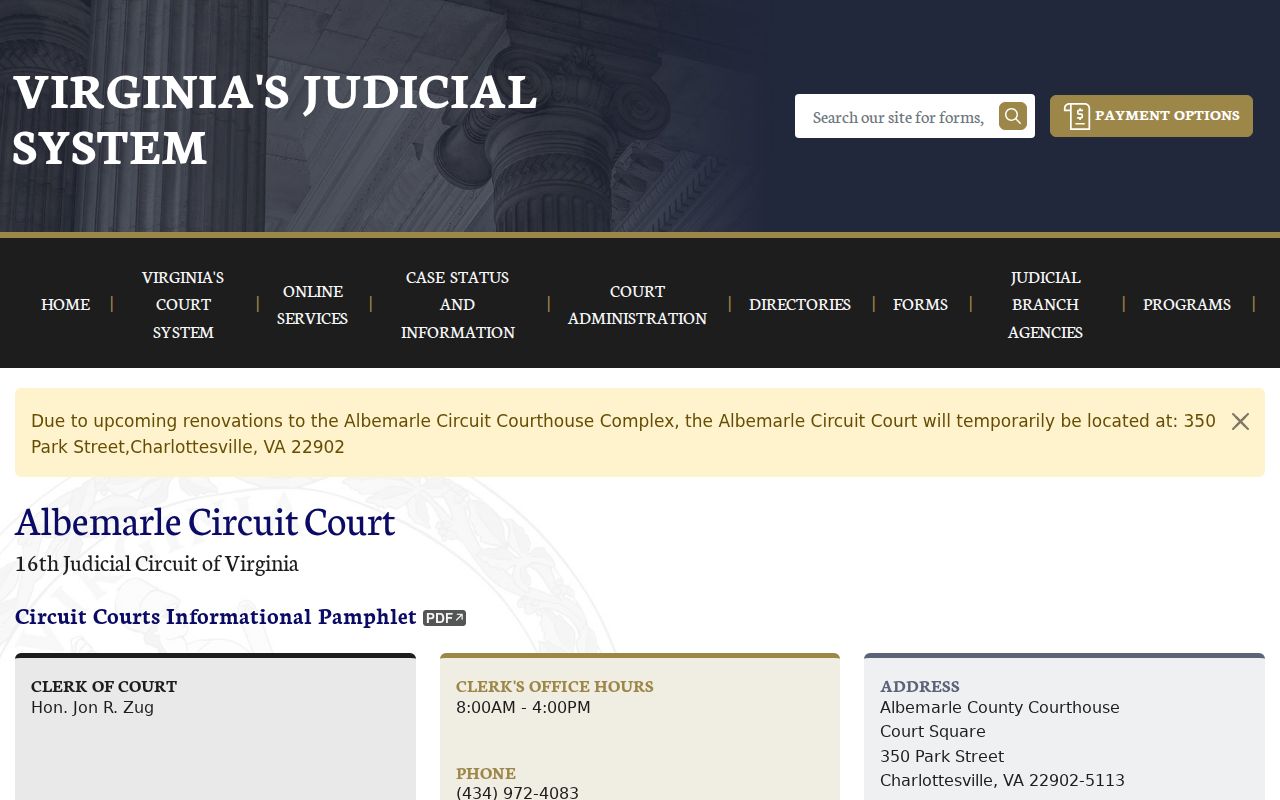
For a pending felony capias in Albemarle County, call the Circuit criminal division instead of reading status into a service total.
Arrest Warrant vs Summons vs Bench Warrant
A summons can replace an arrest warrant. A capias can arise later in an open Albemarle County case, say after an indictment or a missed appearance. The exact court document matters more than the label on a search result.
| Feature | Arrest Warrant | Summons | Bench Warrant |
|---|---|---|---|
| What it orders | Arrest | Appearance at court | Return to court |
| Basis | Probable cause after sworn review | Authorized process for a charge | Missed appearance or court order |
| Issuer | Magistrate or judge | Authorized court official | Judge or court official |
| Response | Ask counsel or clerk about process and bail | Attend the stated date | Ask the issuing court about a motion or new date |
Albemarle Felony Cases Can Move to Circuit
A felony in Albemarle County may begin with magistrate process, pass through a General District Court preliminary hearing, or reach Circuit Court by indictment. Once indicted, Virginia practice uses a Circuit capias. So "I have a warrant" might mean a new complaint, a missed court date, or a later felony step. The Circuit Clerk keeps the criminal file at 350 Park Street. The criminal division answers at 434-972-4085. Ask whether a capias, indictment, or appearance order is on the Albemarle County record.
What to Do If There Is a Warrant for You
Call the issuing clerk before you visit a courthouse or jail. Albemarle County publishes no universal walk-through or surrender window. For a serious or unclear matter, a lawyer can seek a motion, voluntary appearance, or bond plan. If the court directs surrender, confirm the Albemarle County location and the papers to bring.
- Identify the issuing court and the current process entry.
- Ask where and when the court requires an appearance.
- Confirm bond or motion steps with the clerk or counsel.
- Keep the next date and any written court instruction.
Important: A clerk cannot promise release or recall. Ask counsel or the issuing court about the procedure before you appear.
Albemarle Jail Records Answer Custody Questions
After a detention, keep custody and case questions separate. The Albemarle-Charlottesville Regional Jail holds local prisoners, while the issuing court controls the charge and next hearing. ACRJ says a confined person may send an Inmate Request Form to Records for bond amounts and court dates on current charges. The jail's public page lists no universal bond payment portal or window hours. ACRJ's official home page posts facility and public contact information for Albemarle County custody questions.
Bond or release paperwork does not dismiss the case; keep the next court date.