
Bench Warrants in Albemarle County
“Bench warrant” is common plain language. Local court forms use capias, capias to show cause, and failure-to-appear language. A missed hearing, an order violation, or an indictment can lead to process that brings a person before court. The case type controls which clerk should be called.
Adult traffic and misdemeanor cases usually sit in General District Court. Felony capias matters are handled by Circuit Court. J&DR covers juvenile, support, custody, and family process, including records that may not appear in an adult search.
Albemarle Capias Is the Local Court Term
Virginia does not use “capias pro fine” as the main term in the reviewed local sources. A Circuit capias may follow indictment or presentment. A show-cause capias asks a person to answer an alleged failure to follow a court order. Neither label alone tells a reader whether the underlying case has ended.
The District 16 Magistrate may issue initial arrest process, but a later capias belongs to the court handling the case. Ask the clerk to identify the exact document and return date.
How an Albemarle County Bench Warrant Is Issued
A judge or authorized court official may issue a capias when court process requires a person to return. For a felony indictment, Virginia Code section 19.2-232 provides for a capias. The warrant or capias is sent for service, and the court keeps the underlying case file.
There is no single public statewide active-warrant repository. OCIS may show the case or event, but it is not a live status feed. The clerk can say what the docket records; a judge decides a motion or recall.
Albemarle J&DR Process Has Separate Access Rules
A family or support capias should not be routed through the adult GDC desk just because the notice uses the word warrant. J&DR has its own clerk, hearing schedules, and limits on juvenile and family details. The clerk can identify the proper case route and say what a parent, guardian, or attorney may access.
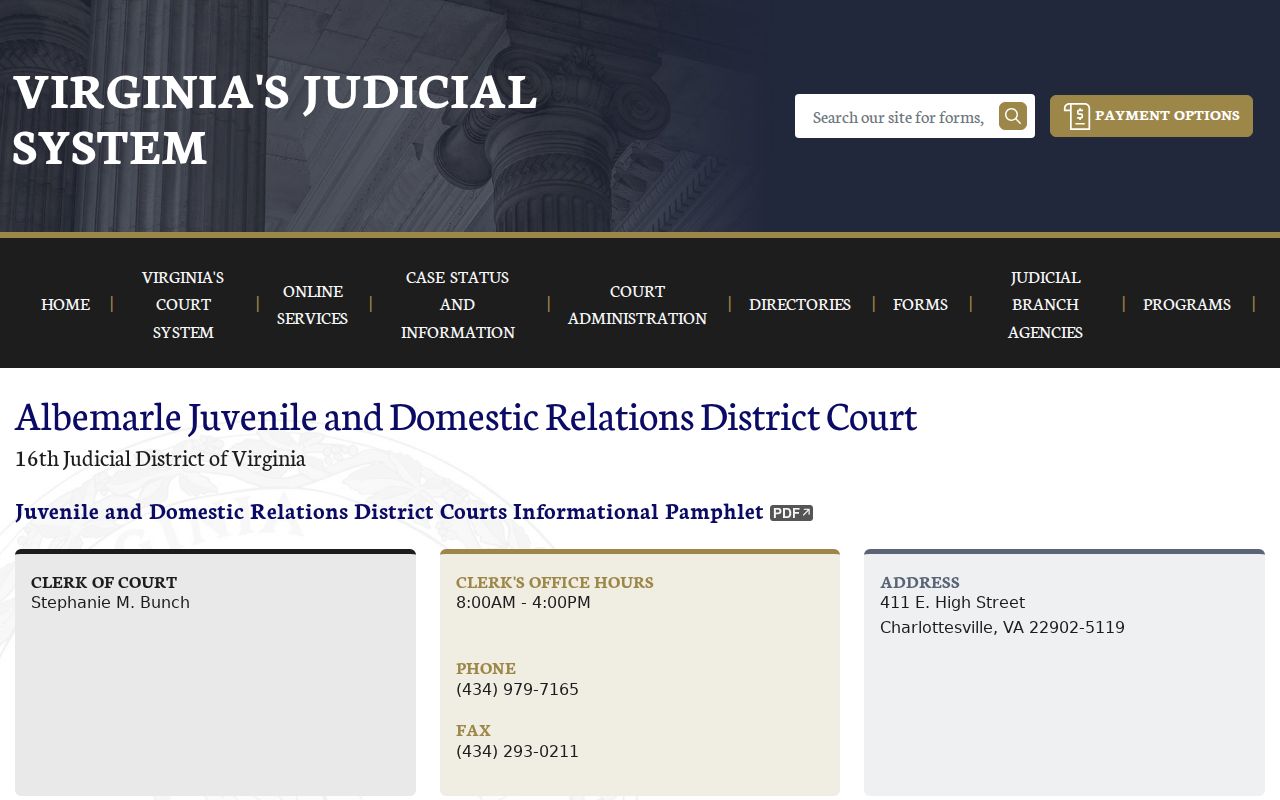
The Albemarle J&DR court page lists the clerk and court information.
The official Albemarle J&DR page shows the separate family and juvenile court contact.
Restricted records may not show in a public OCIS search.
Bench Warrant vs Arrest Warrant
A bench warrant or capias generally brings someone back to an existing court matter. An arrest warrant follows sworn information and a probable-cause review for an alleged offense. In either case, the serving officer does not decide the case or recall the order.
| Feature | Bench Warrant | Arrest Warrant |
|---|---|---|
| Trigger | Missed appearance or court-order process | Sworn complaint and probable cause |
| Issuing route | Judge or court official in the case | Magistrate or judge |
| Case stage | Often an existing docket | May begin a criminal arrest process |
| Resolution | Ask issuing court about appearance or motion | Ask court or counsel about surrender and bail |
Albemarle Capias Forms Record Service Details
Virginia's Circuit forms show why the court file and the service record differ. CC-1301 includes the court, accused descriptors, charging paper, bail terms, return date, execution time, serving officer, and agency. CC-1356 records the reason for a show-cause appearance and its service details.
- Capias
- Process directing that a person be brought before court.
- Recall
- A court withdraws its process by order.
- Quash
- A court sets aside process; the underlying case may continue.
These form fields are a schema, not a local public status code table.
How to Resolve a Bench Warrant
Do not assume a payment or online case search recalls process. First identify the court, then ask what it permits. For a missed adult traffic date, GDC can explain the docket and compliance route. For a felony or family matter, contact the appropriate clerk or a lawyer before appearing.
- Find the case number and ask which court issued the capias.
- Ask the clerk whether a motion, lawyer, or scheduled appearance is required.
- If the court directs surrender, confirm the location and booking route first.
- After a hearing or payment, request confirmation of the next date or court order.
Caution: Do not treat a quiet online case screen as a recall. Confirm the current order with the issuing court before you appear.
Albemarle Bond Terms Are Set Case by Case
No fixed county bond schedule, warrant recall fee, online bond portal, or universal walk-in process was located. The magistrate or judge sets release terms. The state manual describes personal recognizance, cash, surety, and property bonds, but does not set Albemarle counter hours or payment methods.
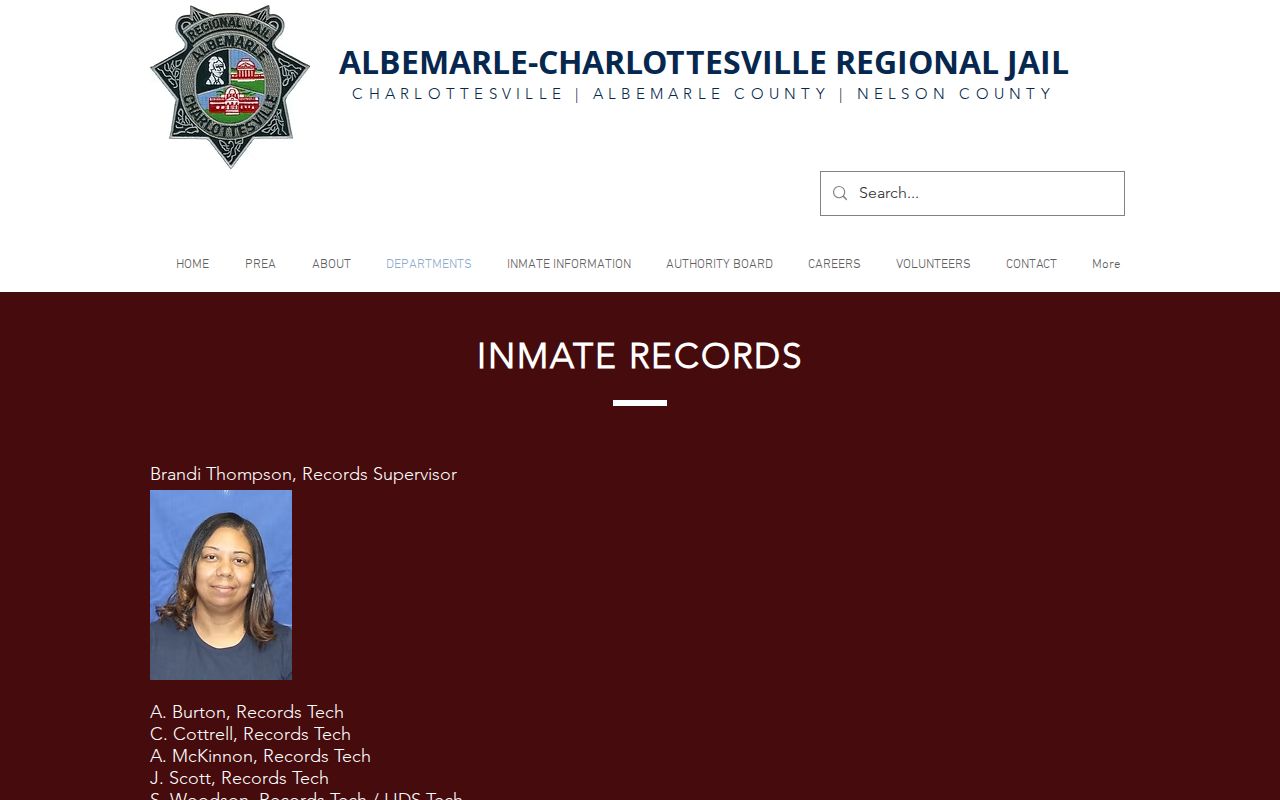
ACRJ says a confined person may use an Inmate Request Form to ask Records for current bond amounts and court dates. That is not a public bond lookup service.
The jail's official records page describes its inmate request route for bond and court-date information.
Ask the judicial officer or jail for current release instructions; do not infer a payment method.
Which Albemarle County Court Issued It
The court level, not the place where a deputy serves the paper, points to the right clerk. Albemarle has no separate municipal court in the reviewed sources. Scottsville is a town, but town materials do not identify a stand-alone court or warrant portal.
Use OCIS to identify the case and court. The District 16 Magistrate's Office at 1610 Avon Street Extended handles initial complaints and bail process, not the underlying clerk file.
Albemarle Magistrates Review Initial Complaints
ACPD directs a person seeking a criminal warrant to appear before a magistrate. District 16 magistrates review sworn information and may issue an arrest warrant or summons, then conduct initial bail hearings. Later court process belongs to the Circuit, General District, or J&DR court handling the case.
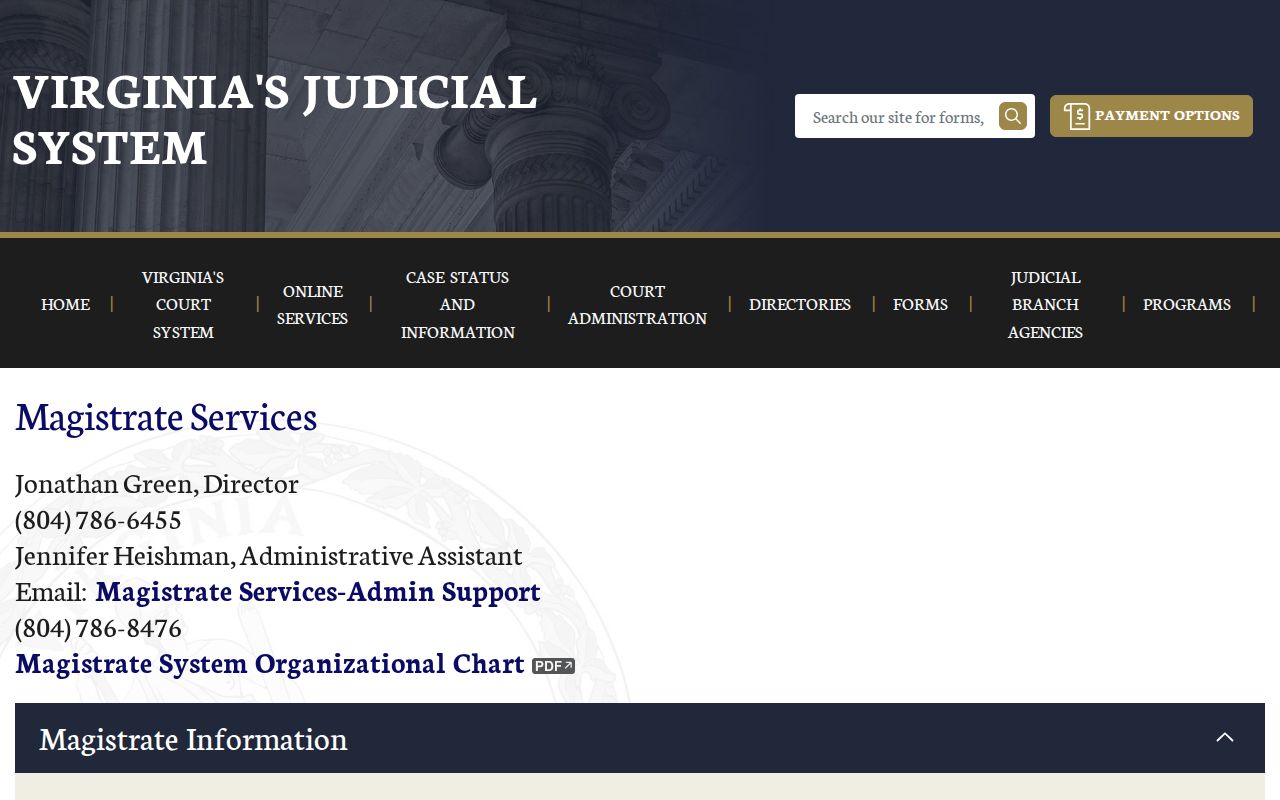
The Virginia Magistrate Services page describes those duties. Local contact is 1610 Avon Street Extended, 434-977-0220.
The state judiciary's magistrate page explains the role in reviewing complaints and setting bail.
Call the issuing clerk for a later capias, motion, or court date.