
How to Check for a Warrant in Albemarle County
Virginia's Online Case Information System, called OCIS, is the best public starting point for an Albemarle County warrant check. It pulls case information from participating Circuit, General District, and J&DR courts. You can search by the name printed on a summons or court paper, by case number, or by hearing date. A match helps you figure out which court is involved. It cannot confirm that a warrant is active right now. Keep the notice, citation, or case number at hand when you call. A relative can make the call for you, though the clerk decides what may be shared over the phone. Court records and service records sit in different places, so ask where each one lives.
- Accept OCIS terms, then choose name, case number, or hearing date.
- Pick Albemarle and the likely court level. Try a partial name of at least two characters if spelling is uncertain.
- Read the charge, hearing, and service details, then call the clerk that holds the case.
- If no case appears, ask the Sheriff, ACPD, or magistrate about agency-held process.
- Before appearing or surrendering, ask the issuing court or a lawyer what procedure applies.
Albemarle Warrant Searches Start With OCIS
OCIS asks for a court case, not a warrant status. Its controls include a court level and court selector, a case number field, and optional hearing-time filters. A case number search requires one selected court. Name searches allow a partial name with two or more characters. Complainant and unit fields appear only in some advanced searches.
The official Virginia OCIS search is free to use after accepting its terms. The result may show a case, charge, date, and hearing history. It may not show a warrant number, bond amount, or a current active or recalled code.
Virginia OCIS displays court search controls and the terms notice. The official search page is the right starting point for a case lookup.
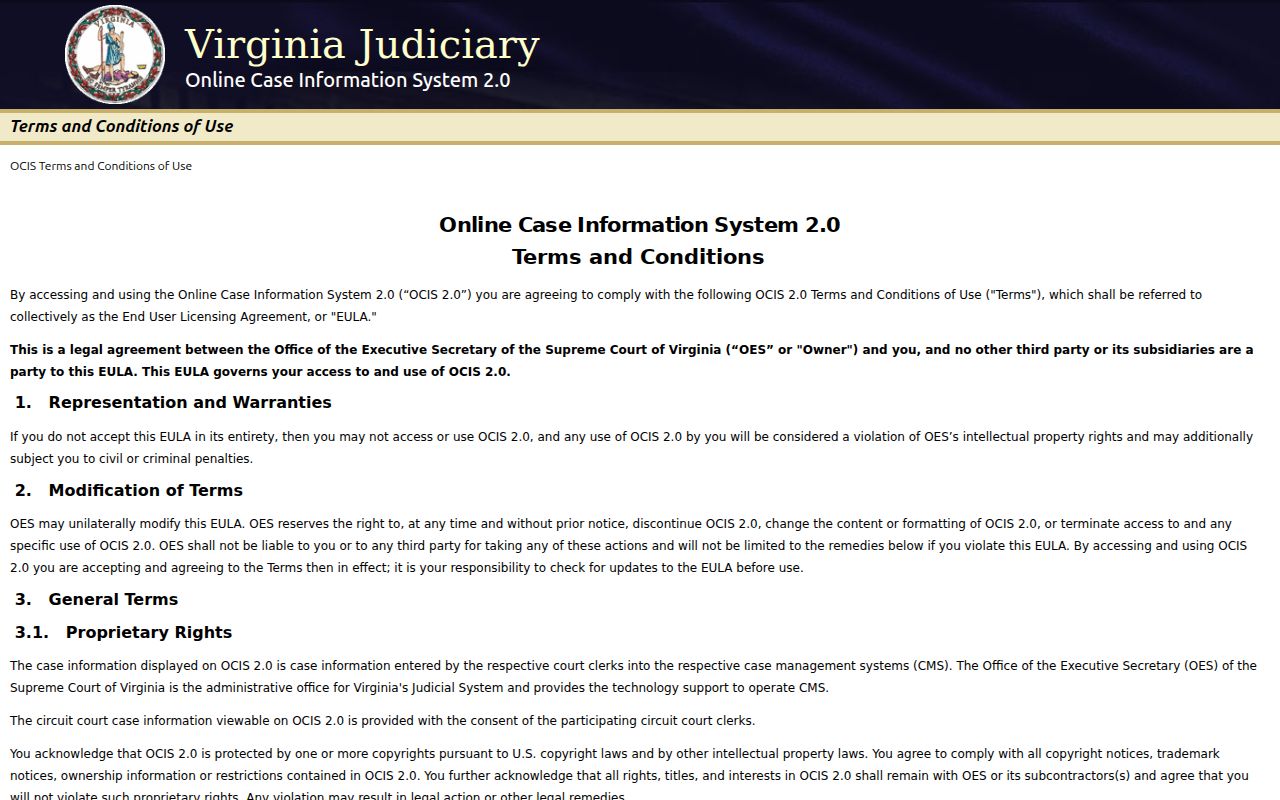
Use the result to spot the right Albemarle County clerk. That office can confirm what OCIS leaves open, including warrant status.
Types of Warrants in Albemarle County
Several Albemarle County court processes get called a warrant. An arrest warrant follows a probable-cause review. A capias returns a person to court after an indictment or a missed obligation, and traffic cases can add a failure-to-appear step plus a DMV notice. A search warrant authorizes a search, not an arrest-record lookup.
| Warrant Type | How It Arises | Who Issues It |
|---|---|---|
| Arrest warrant | Sworn complaint and probable-cause review | Magistrate or authorized court |
| Bench process / capias | Missed appearance, indictment, or order | GDC, Circuit, or J&DR |
| Traffic warrant | Failure to comply with a traffic summons | General District Court |
| Search warrant | Probable cause to search a place or item | Magistrate or judge |
Albemarle Capias Terms Mark Different Court Steps
Virginia forms say "capias" and "capias to show cause," and the difference matters. A capias can follow a felony indictment. A show-cause capias brings someone in to answer an alleged order violation instead. Neither one is a new arrest warrant. Court routing depends on the charge. Adult traffic and misdemeanor questions usually go to General District Court, Circuit Court holds felony process, and J&DR handles family and juvenile matters. Scottsville runs no separate municipal court page. Ask Town Hall which court filed an ordinance matter rather than assuming a city-court system sits beside the Albemarle County courts.
What an Albemarle County Warrant Record Shows
OCIS is a case display. Official forms carry more process detail. A Circuit capias names the court, charge, return date, serving agency, and bail terms. A recognizance form records release conditions, but Albemarle County publishes no local warrant-number format or status-code key.
| Case number | CR12345678-90 is an OCIS example, not an Albemarle person's number. |
|---|---|
| Charge | Offense description and Virginia Code section when displayed. |
| Court | Circuit, General District, or J&DR; the clerk holds the official case file. |
| Process | Issue, return, execution, or service details may be on the form. |
| Bond | Set by a judicial officer; no countywide fixed schedule was found. |
| Status | Confirm active, served, recalled, or quashed with the issuing clerk. |
Albemarle Warrant Service Figures Need Context
The Sheriff's 2025 annual report counts 48 warrants served. ACPD's 2024 report says its Police Services Unit processed 2,059 warrants in Albemarle County. Those are workload counts, not open-warrant totals for any one person or case.
The Sheriff's annual report is a dated workload source, not a live warrant feed.
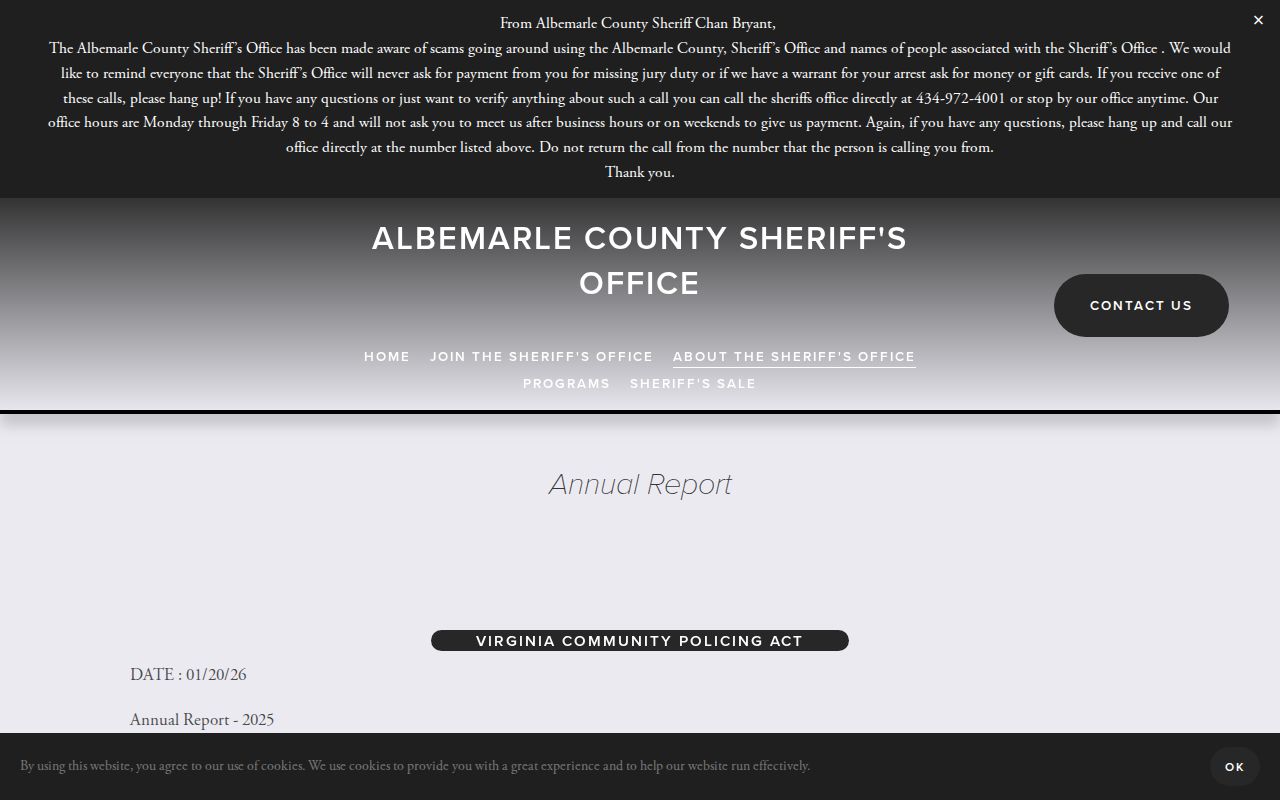
Treat the numbers as service activity in Albemarle County, since only the court can confirm one warrant's standing.
Who Issues and Serves Albemarle County Warrants
Several offices handle Albemarle County warrants, each with its own role. Magistrates hear sworn complaints and can issue warrants or summonses. From there, adult traffic and misdemeanor cases go to General District Court, felony indictments and capias records go to Circuit Court, and J&DR handles family, support, and juvenile matters. The Sheriff's Office serves the court-authorized papers and guards the courts. ACPD and Scottsville police serve process too, within their own authority.
Albemarle County Sheriff's Office
411 East High Street, Building B
Charlottesville, VA 22902
434-972-4001
Albemarle Court Offices Control the File
Getting to the right counter in Albemarle County takes a little care, since the courts moved. Circuit and General District operations relocated to the Courts Complex in June 2025, so older directions may point you to a different entrance. The current court pages list 350 Park Street, but confirm the public entrance with the clerk before you go. J&DR stayed put at 411 East High Street. The magistrate office sits on Avon Street Extended. The Albemarle General District Court page posts current clerk contact details and docket information. Remember, the Sheriff serves papers. Deciding a recall or setting a new court date belongs to the court.
- General District Court: adult traffic, misdemeanors, and the capias docket.
- Circuit Court: felony indictments and criminal capias records.
- J&DR Court: juvenile, family, and support matters.
- District 16 Magistrate: initial sworn complaints and bail review.
The official GDC case-information page shows its public search route.
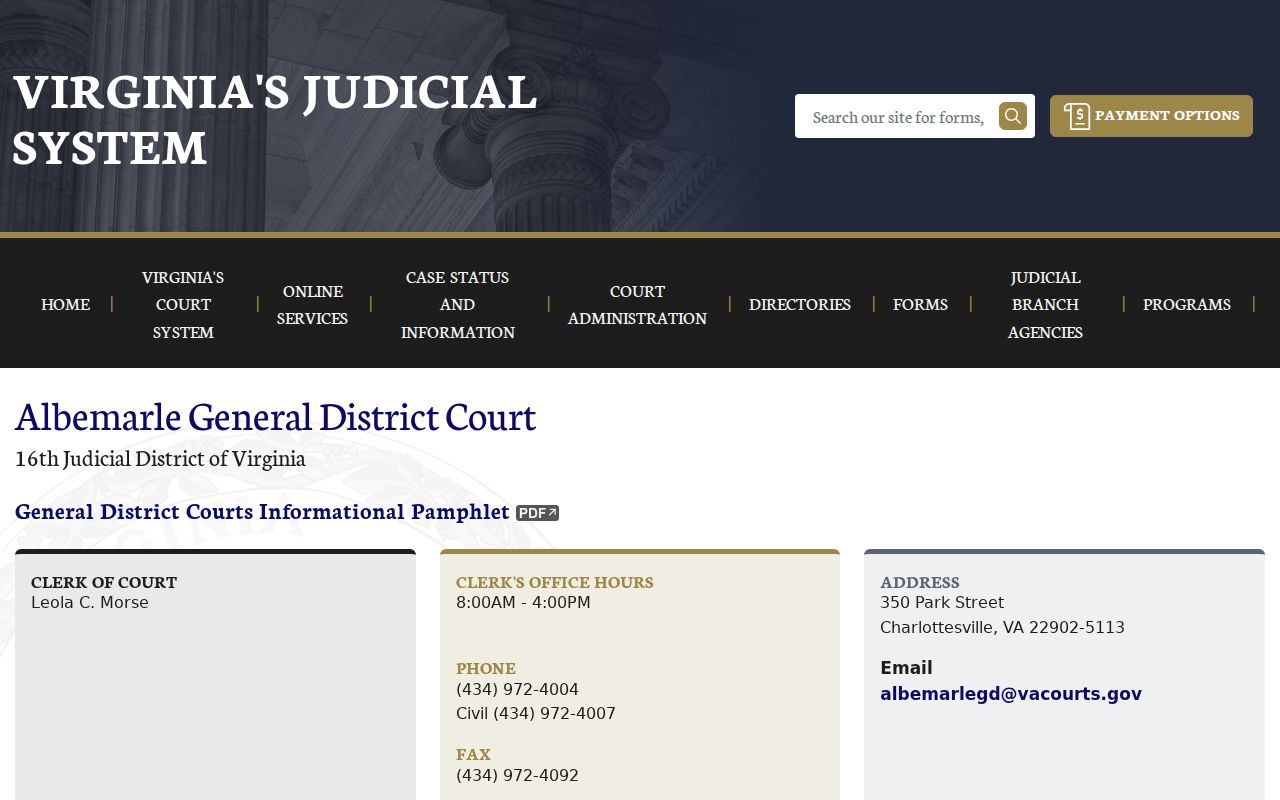
Felony process belongs to Albemarle County Circuit criminal, so call that office. For a family or support matter, contact J&DR instead.
What to Do If You Have an Albemarle County Warrant
Start by finding the issuing Albemarle County court and asking what it requires. A clerk can walk you through the docket and filing route. What a clerk cannot do is give legal advice or promise a recall. If the matter is a felony, a family case, or a possible arrest, a Virginia lawyer can contact the court and help plan an appearance or surrender.
Important: Ask counsel or the issuing clerk before you appear. A voluntary visit can still lead to booking and a judicial bail decision.
Albemarle Has No Warrant Amnesty Portal
Albemarle County runs no amnesty event or safe-surrender program. You will not find a public active warrant list or an online bond portal here. The Sheriff posts service information, and ACPD takes Crime Stoppers tips, but neither counts as a warrant roster. An agency report or a news notice is not a live case-status list either. When an online result is unclear, call the clerk who handles it. The GDC clerk covers adult traffic and misdemeanor process, Circuit criminal holds felony capias records, and J&DR handles family and juvenile matters.
Public Access to Albemarle County Warrant Records
Virginia FOIA opens existing public records to you, though specific exemptions apply. A Albemarle County court docket or order sits with the clerk, while the Sheriff or police may hold service and investigative records. Ask for a named case document. FOIA does not force an agency to build a new statewide warrant list.
Key Rules:
Virginia Code § 2.2-3704 sets the request and response rules.
Virginia Code § 2.2-3706 governs access to law-enforcement records.
Virginia Code § 16.1-301 protects many juvenile law-enforcement records.
Albemarle Warrant Requests Seek Existing Files
When OCIS does not answer a records question, go to the office that likely holds the document. A Albemarle County FOIA request should name an existing record with reasonable detail. The county responds within five working days. It may take seven extra working days when the law permits. You can get a cost estimate before any copies or long search work. Each office keeps its own slice. A court order belongs with the clerk. The Sheriff or ACPD may hold service or police records, while juvenile, sealed, and investigative material can be restricted. And FOIA does not require an office to build a new public warrant list, so frame the request around a specific file.
Warrant Records by City in Albemarle County
Scottsville is the only incorporated town in Albemarle County. It also spills into Fluvanna County, so figure out which side of town and which agency handled the matter before you call. Charlottesville is an independent city with its own courts. Crozet, Hollymead, and North Garden sit inside the county and are not separate municipal-court jurisdictions.
Scottsville Warrant Records
524 residents in the 2020 Census; town police and cross-county court routing.
Scottsville Warrant Service Crosses County Lines
Scottsville's official police statistics show 39 warrant-service calls in 2023, 33 in 2024, and 38 in 2025. Those are service calls, not a count of unique warrants or people. The town's small police department uses mutual-aid agreements. Albemarle and Fluvanna agencies each serve different parts of town. Town Hall can point you to the right local contact. Still, the issuing clerk controls the case. On the Albemarle County side, adult traffic and misdemeanor matters start with GDC, while a Fluvanna case must be checked with its own court.